
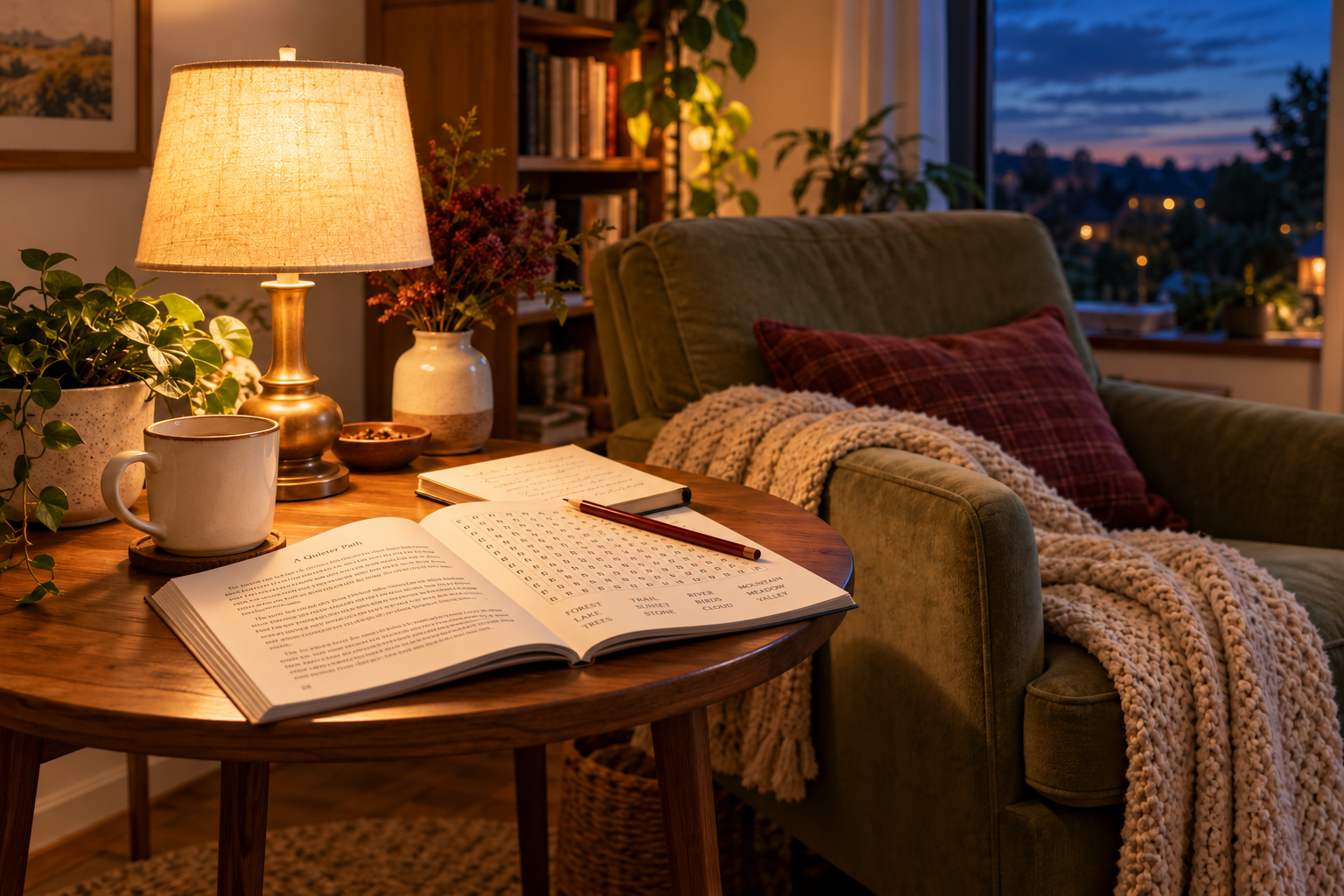
A Cozy Puzzle Night at Home
A cozy puzzle night at home can be as simple as choosing a book, gathering a few supplies, and giving yourself an evening with something interesting to solve.
This guide is for a quiet evening on your own, whether you enjoy word searches, a mystery with puzzles woven into the story, or another paper-and-pencil challenge.
Here is how to get ready.
1. Choose the experience you want
Start with what you feel like doing.
Independent puzzles are useful when you want to dip in and out. A connected puzzle mystery may appeal when you want characters, clues, and a story to follow across several sessions.
Read the book's description and opening instructions. Check whether puzzles can be completed in any order, whether you need to record answers, and how the solutions or hints are arranged.
If you are continuing a book, find your current place before settling in.
2. Gather your supplies
A small setup is usually enough:
- Your puzzle or activity book.
- A pencil and eraser.
- A bookmark.
- Any journal or log the book asks you to use.
- Optional scrap paper for notes or working out answers.
- A favorite drink, placed safely away from the pages.
If your chosen activity includes coloring, gather the pencils or other materials recommended for that book.
Keeping everything together means fewer interruptions once you begin.
3. Make the space comfortable
Choose somewhere with enough light to read comfortably and distinguish the letters or details on the page.
Give your book a steady surface. A table, desk, or lap tray can help when you are writing notes or circling words.
Set your phone aside if possible. Quiet may suit you, or you might prefer gentle background music. Choose whatever helps you follow the page without competing for your attention.
4. Give the evening a loose shape
You can simply begin and see how you feel. If you prefer a little structure, try this flexible plan for a half-hour session:
- First five minutes: Settle in, read the instructions, or review your previous notes.
- Next twenty minutes: Read, solve, and follow whatever directions the book provides.
- Final five minutes: Record discoveries and mark where to return.
Treat those times as a guide. You can pause earlier or stay longer when the mystery has your attention.
With a connected puzzle book, follow its directions carefully. The next page may not be your next destination, and a detail recorded now may matter later.
5. Leave a clear trail for next time
Before putting the book away, make sure you know where to resume.
Complete any required log entries, bookmark your current location, and mark the next destination if it appears elsewhere in the book.
If you are keeping your own theories, jot down a brief question or observation. A note such as "Why did the guest leave before dinner?" may help you return to the story without rereading several pages.
If a puzzle has become frustrating, check the instructions again or leave it for another session. A fresh look can be part of the process.
Choose your next puzzle night companion
What would you enjoy discovering tonight?
Explore Puzzle Plot's books to find an activity that suits your evening. Check each description for the theme, puzzle types, and how the experience unfolds, then gather your supplies and settle in.